
Curriculum
Curriculum
JoyKids Learning Culture
JoyKids International Preschool’s curriculum is based on both the Montessori and Thematic Integrated Approach to teaching and learning. We strive to grow the children in five key areas (cognitively, emotionally, socially, linguistically, and physically) with a strong focus on developing a solid early year’s foundation. Students who complete JoyKids’ curriculum are prepared to excel academically, emotionally and socially in primary school. We emphasise positive community values and provide a safe and caring framework for children to challenge themselves by trying new things.
Instilling our students with a lifelong passion for learning and the skills, knowledge and disposition to take on a complex world are the cornerstones of our teaching ethos. We nurture our students to collaborate, think creatively, reason critically, and form inclusive global perspectives.
Holistic Early Childhood Education
The JoyKids Early Childhood Programme is based on development of the whole child. The five key development streams are: cognitive, emotional, social, language and physical development.
Early childhood research indicates that play is essential in a child’s learning and development. Guided purposeful play aids in subject-themed learning, sparks creativity and encourages imagination. Our teachers scaffold and support a broad range of active learning opportunities. Children construct their own knowledge about themselves, others, and the world around them by practicing developmentally appropriate skills, making choices about their individual learning, and communicating their understanding through healthy relationships with peers and adults.
Cognitive Development
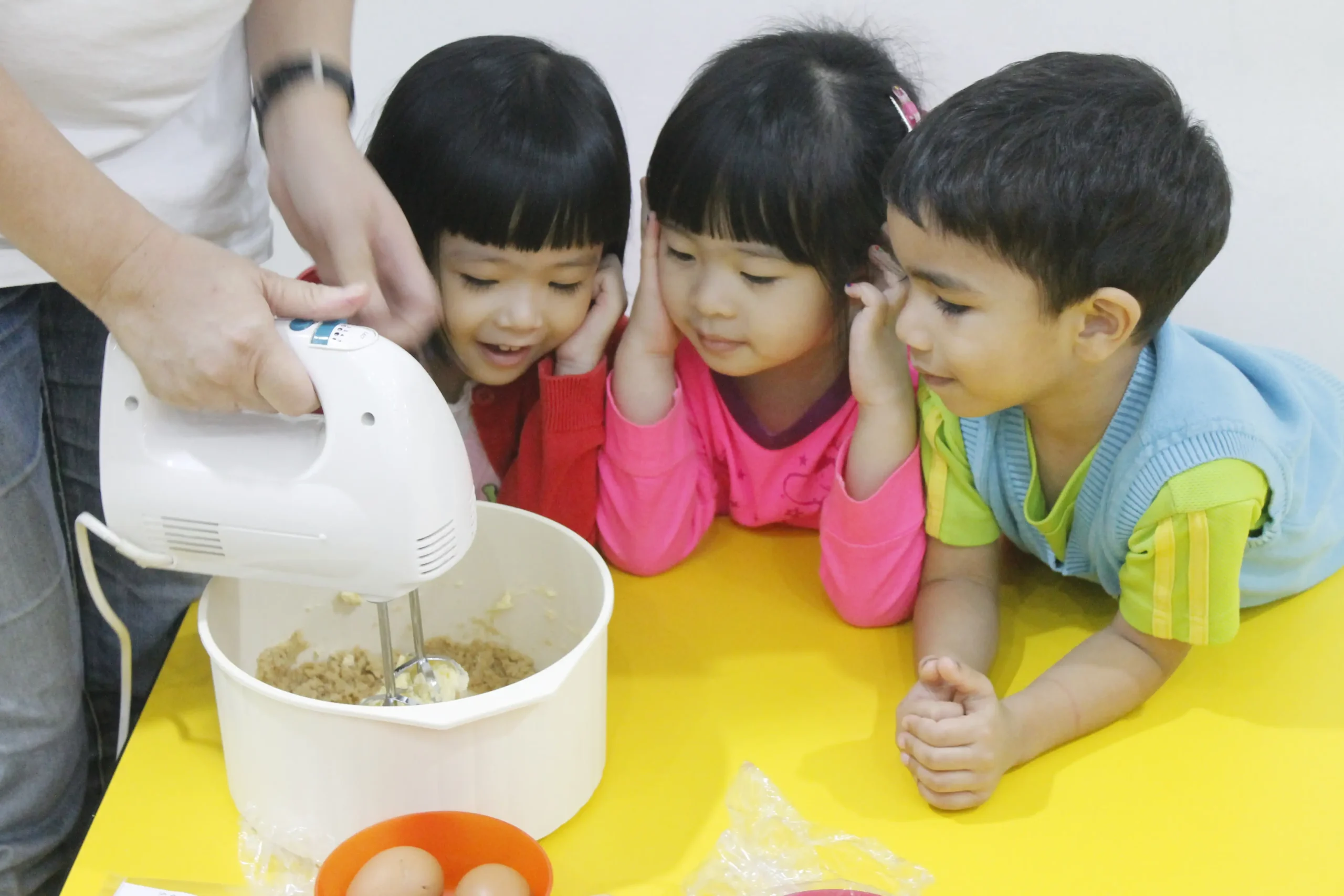
Through subject-themed guided play, children develop the ability to focus on one thing for an extended period of time. They become able to recall information and process it in the present. As children enter preschool they become able to focus on tasks with specific goals (ie, learning a series of new words). Children also strengthen the ability to conduct mental tasks and develop self-awareness.
Emotional Development
Forming solid emotional skills in foundation years influences the mental health and well-being of children later in life. Children learn to share with and get along with other kids, transition easily from one activity to the next and identify their emotions. As children enter preschool they learn how to express themselves appropriately, show empathy, develop patience and model good behaviour to younger students.
Social Development
By engaging in play in small groups children learn how to cooperate, follow the simple rules of a game, learn how to take turns and share. Children develop self-esteem and enjoy new accomplishments. We support social development in a way that is suitable to each child’s temperament.
Language Skills
During early childhood, student’s ability to master sounds and language grows in an astonishing way. Nursery school children are generally able to understand more words than they can speak. By engaging children in different activities, we expose them to new vocabulary and encourage them to express themselves. By the time children enter preschool, they are consistently formulating sentences and able to follow basic grammatical rules.
Physical / Health Development
In early years, children are still developing gross motor skills that consist of large movements and coordination. By the time a child enters preschool, they are working toward finer motor skills like using tools effectively (ie, writing with a pencil). Children in preschool are able to identify the importance of good health which includes exercise and a healthy diet. Children are also able to manage their own basic hygiene including washing their hands, dressing and going to the washroom with minimum help.
Learning Approach
Whole-Child Approach
Rigorous
Students who complete their education at JoyKids will leave equipped with cognitive, emotional, social, linguistic and physical competencies and the readiness to confidently join primary school.
Learning is largely question-based with an emphasis on problem solving aiming to build up a student’s ability to reason and think independently.
In addition to a rigorous and challenging academic programme, JoyKids also runs lively sports, music, arts and drama programmes in which students are presented with many opportunities to develop their skills and interests outside of the classroom.
Comprehensive Learning Experience
At JoyKids, our learning culture is defined by a boundless curiosity and a harmony between academic rigor and creative expression. We believe that true education goes beyond the textbook—it is an immersive adventure that engages the head, the heart, and the hands. Through our unique blend of Montessori principles and Thematic Integrated learning, we offer a diverse spectrum of experiences. From the logic of Math & Science to the rhythm of Performing Arts, and from the vitality of Sports to the innovation of Digital Learning, we provide the tools for your child to discover their passions. Explore how our key pillars of learning combine to build a foundation for holistic success.
Mathematics & Science
We engage students in math and science through a Thematic Integrated Curriculum for preschoolers.
The aim is to provide a curriculum that all children can follow to establish a foundation for later achievement in primary school. We respect the children’s needs for learning through concrete and hands-on experience so we have designed...
We engage students in math and science through a Thematic Integrated Curriculum for preschoolers.
The aim is to provide a curriculum that all children can follow to establish a foundation for later achievement in primary school. We respect the children’s needs for learning through concrete and hands-on experience so we have designed a developmentally appropriate programme for children of different age groups.
In the early years, we engage the children in environmental mathematics. In the process, we bring about the development of Lower Order Thinking Skills, e.g. classifying, comparing, ordering, patterning, measuring, counting and problem-solving with numerals. Children will also acquire Mathematical concepts and knowledge in their learning process.
Languages
The Second Foreign Languages Programme at JoyKids enables students to become competent communicators with the confidence and ability to interact as global citizens. Our exciting communicative and interactive approach to language learning equips students with the desirable skills and language qualifications that are increasingly becoming essential to university and career opportunities....
The Second Foreign Languages Programme at JoyKids enables students to become competent communicators with the confidence and ability to interact as global citizens. Our exciting communicative and interactive approach to language learning equips students with the desirable skills and language qualifications that are increasingly becoming essential to university and career opportunities. We focus on the skills of empathy and creativity as well as developing cultural insight, understanding, and the ability to communicate effectively with a high degree of fluency and accuracy.
>> Mandarin:
As Mandarin is fast becoming one of the most important languages in the world, JoyKids provides extra Mandarin classes for full-day students taught by an internationally certified teacher from China.
>> English:
We live in a global and interconnected economy, and we need to prepare our kids for it. In addition to teaching Mandarin, we cultivate and strengthen English-speaking skills. English remains a key language in global business, science, and technology, and we see the importance in preparing our kids to navigate a multi-cultural workplace in which knowledge of languages and cultures other than our own will provide a competitive advantage for the future.
Physical Education
Physical Education (P.E.) is a vital component of the curriculum at our school. JoyKids believes that providing children with a variety of enjoyable sports activities will inspire a life-long dedication to a healthy lifestyle and love of exercise.
Sports
In addition to the activities mentioned above, sport is an important part of the well-rounded curriculum we offer our children. We encourage all types of sports and activities at JoyKids because of the long-term benefits they provide.
Sports help children to develop physical skills, experience exercise, make friends, have fun, learn to play as a member of a team, learn to play fair, and improve self-esteem. They can help physical development, cognitive and academic, psychological development, social development, and character development.
In addition to the activities mentioned above, sport is an important part of the well-rounded curriculum we offer our children. We encourage all types of sports and activities at JoyKids because of the long-term benefits they provide.
Sports help children to develop physical skills, experience exercise, make friends, have fun, learn to play as a member of a team, learn to play fair, and improve self-esteem. They can help physical development, cognitive and academic, psychological development, social development, and character development.
Regular physical activity is an important part of a healthy lifestyle. Making physical activity a priority and encouraging good habits in children from an early age is important and can help them to develop the skills they need to continue being active throughout their lives.
Performing Arts
>> Music
Music and Art are fundamental elements within the curriculum. We believe all children are artists. Therefore, musical and art education begins in Pre-Nursery and continues every year.
In this emotionally safe environment, children have the freedom to love and appreciate music, while developing fundamental musical skills that will last a lifetime. Whether the children are singing, playing, or listening, teachers direct them to listen and hear in new ways which exercises their aural discrimination...
>> Music
Music and Art are fundamental elements within the curriculum. We believe all children are artists. Therefore, musical and art education begins in Pre-Nursery and continues every year.
In this emotionally safe environment, children have the freedom to love and appreciate music, while developing fundamental musical skills that will last a lifetime. Whether the children are singing, playing, or listening, teachers direct them to listen and hear in new ways which exercises their aural discrimination. Playing instruments and adding movement to the lessons teaches children about sequential learning which is essential in reading comprehension.
>> Art
We emphasise a ‘story-based' art experience which we believe simultaneously strengthens the children’s language development, expression and self-esteem. Our teachers strive to show the children the joy of being creative and help students to develop confidence in expressing their imagination.
>> Drama
Speech and Drama are the perfect mediums for helping children to acquire both confidence and effective communication skills. They allow children to express freely, explore their imaginations and to develop and present their own ideas.
Children’s artwork is regularly displayed and often appears in school publications. Children also take part in several performances during our cultural celebrations each year.
>> Insert pictures from https://www.joykids.my/performing-arts where necessary, suggest an attractive layout
During our many cultural celebrations, children will show off their performance skills through a variety of performing arts. JoyKids also holds an annual production. Check out our YouTube Channel for videos.